
The Tale We've Fallen Into
My PhD thesis is available at last!

Twenty-five years after I read The Lord of the Rings for the first time, in the spring of 2001, the PhD thesis I wrote about it is now freely available to download from the University of Glasgow: “The Tale We’ve Fallen Into: J.R.R. Tolkien’s The Lord of the Rings and the Post-Christian Quest for Meaning.”
Here’s the abstract:
Despite the popularity of J.R.R. Tolkien’s The Lord of the Rings (LotR) among readers of many religious and philosophical backgrounds, theological scholarship has predominately framed it as a Christian fantasy which can only be fully understood through a Christian lens. My thesis refutes these claims by exploring the novel’s reception among contemporary nonreligious readers. Building on a multidisciplinary foundation of Tolkien studies, fan studies, sociology of religion, and narrative theology, I develop the twin theoretical concepts of religion as enchanted worldbuilding and secondary religiosity. The enchanted Secondary Worlds of fantasy fiction resemble religious worlds and can perform religious functions for their readers. They do so “secondarily,” however, without serving as the primary medium in which and with which a person leads a meaningful life. Then, employing an integrative methodology that combines in-depth interviews with twenty nonreligious Tolkien fans, autoethnography, and a close reading of the text, I draw out five key insights into when, how, and why LotR comes to function secondarily religiously for participants. These are: 1) individualized lived nonreligiosity that allows for the novel’s incorporation into a person’s bricolage of beliefs and practices; 2) immersive literary enchantment as a precondition of Tolkien fandom and, therefore, of secondary religiosity; and readers’ integration of the text into projects of 3) self-making, 4) relationship-making, and 5) meaning-making. I conclude by proposing a reflexive theopoetics of secondariness: fantastic Secondary Worlds “mean” in the same way as religious Primary Worlds, but they do not make the same kinds of ontological, epistemological, and ethical claims. They draw readers in and disavow their own reality in the same breath. Mediating between disenchantment and re-enchantment, LotR thus creates space for multiple accounts of its (non)religious significance, subverts reactionary appropriations, and positions itself as a post-Christian work for a post-Christian age.
If any of that intrigues you, or if you’ve kept up with my work on this (sporadic) newsletter over the last couple years and thought it worthwhile, I would treasure any thoughts and reflections you might have. Nearly a half-decade’s worth of work are rolled up in these 105,028 words - but it would be even more accurate to say that a quarter-century’s worth of life is rolled up in them. As Tolkien told his friend Fr. Robert Murray in 1953, by publishing LotR, “I have exposed my heart to be shot at” (Letters #142).
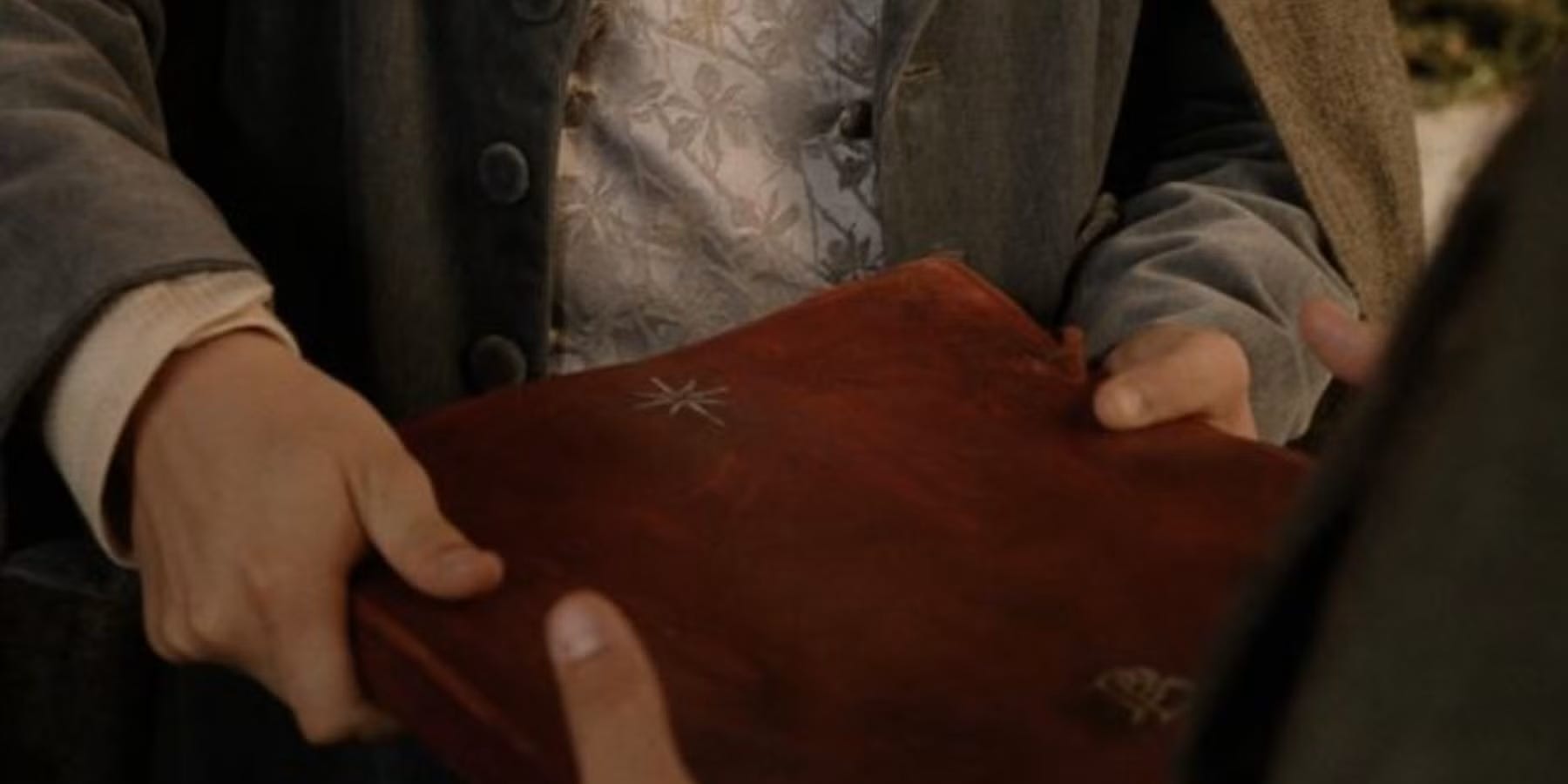
“I have quite finished, Sam. […] The last pages are for you.” (LotR VI6, 1027)
Downloading right now!
Congratulations! I can hardly wait to read it! (But alas I must for a while because, deadlines!).